100 days to first ball: Inside LAKR's race to build Los Angeles' Olympic cricket home
 CBTF
CBTF
 Jul 07, 2026
 08:00:00
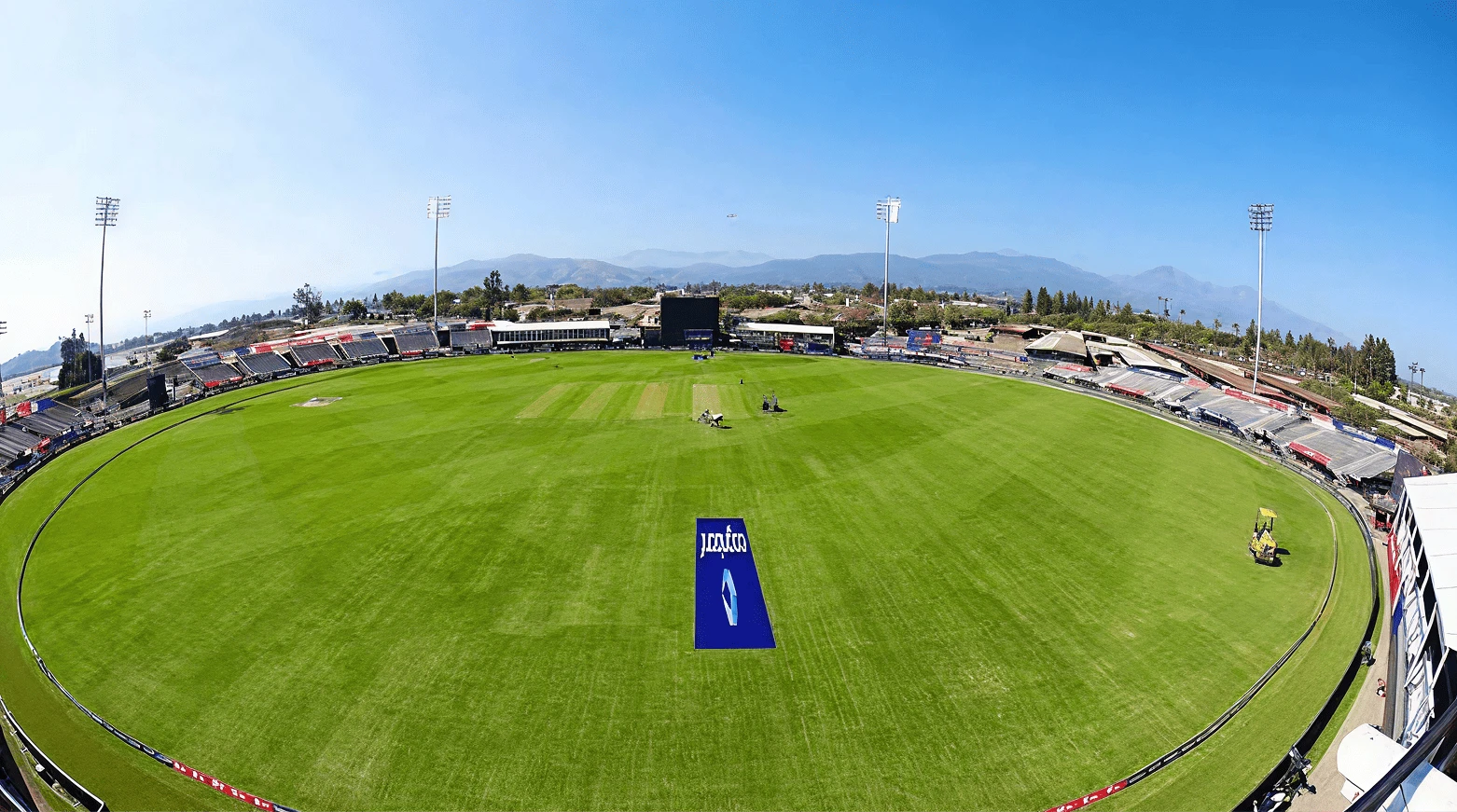
Around 1pm on July 1, five hours before Los Angeles Knight Riders' new home in Pomona was to host its first Major League Cricket game, Mayank Dayal, Business Head of LA Knight Riders, found a quiet corner near square leg and allowed himself a moment. Dayal's moist eyes had a story to tell.
In front of him lay the final product: stumps planted around an immaculately marked crease, perimeter signage wrapped around the playing area, stands ready to receive spectators, broadcast machinery in place, LED boards and sightscreens completing the look of a venue that had, at last, become match ready. As he gazed at the ground, several memories collided at once. The calmness he was surrounded by stood in sharp contrast to the storms that had preceded it. A hundred-day race against time for the Knight Riders franchise to host their first home game on July 1.
For Dayal, the sight spoke not only of relief, but of the sleepless nights that had come before it. Of transforming a site that had spent decades as a horse racing venue before lying largely dormant into an international cricket ground in barely 100 days. Of hazmat-suit-clad crews on site after lead and asbestos concerns surfaced. Of buried sewage lines and a live 15,000-volt electrical transponder that revealed themselves only after the digging began, each forcing a fresh workaround in a build already racing the clock. Of a 12-and-a-half-foot wall from the old equestrian track, still buried beneath the surface, forcing crews to break through another remnant of the site's previous life before the field could be levelled. Of moving nearly 35,000 metric tons of earth to level a site where one end stood eight-and-a-half feet higher than the other. Of a floodlight pole that had to be moved 20 feet barely two weeks before the opener, triggering fresh drawings, city approvals and aviation clearances from the US Air Force.
For years, American cricket has been littered with stadium plans, facility proposals and ambitious build-outs that either stalled, or were quashed without a quiver. In a country where land is expensive, regulations vary from city to city, and residents can raise concerns over traffic, parking, noise, lighting and the environment, building a cricket ground is not merely a construction exercise. It is a negotiation with every stakeholder that surrounds the land.
In Pomona, that meant finding a deal that worked for LAKR, Fairplex and the city of Pomona itself. The Fairplex being a not-for-profit entity that operates the LA County Fair and leases the 500-acre fairgrounds from the city brought with itself its own set of challenges. LAKR's 60-acre parcel sat within that ecosystem, landlocked inside a larger property.
That process began long before Dayal, who was cherrypicked to lead the Knight Riders initiative in LA moved as marketing head of Gujarat Titans to LA. Dayal is quick to point out that the identification of the site was itself the product of years of work by Venky Mysore, and the Knight Riders franchise. Getting to Fairplex, however, was its own long chase.
Before Pomona emerged as the answer, the Knight Riders had spent years searching for the right fit. In a country where every local government has its own priorities, regulations and development objectives, finding a site is only half the challenge. Finding a location where the interests of the franchise, the landowner and the local authorities align is something else altogether.
"I know that there were many false starts, and we had to kiss many frogs before we got the princess," Dayal says.
That the princess eventually turned out to be Fairplex was not accidental. The site was scalable. It had freeway access, mountain views, and a hotel within walking distance, and the kind of open expanse rare in the Los Angeles sporting market. But it also had history.
The Fairplex site had once been an active World War II location, with the US Army having a presence there. After that came livestock exhibitions, animal trading, the LA County Fair and horse racing. Later, the old horse racing track was partly broken up with the idea of creating soccer fields, though that plan never truly took off. By the time LAKR entered the picture, the site was a blend of wild grass, gravel, uneven earth, old barns and stables and land that had not been levelled for the demands of professional cricket.
Once Fairplex became the chosen site, the next challenge was to assemble the machinery around it. This was not a project that could be pushed through by LAKR alone. It needed the confidence of the Fairplex administration, the cooperation of the city and county, and the responsiveness of a whole chain of clearance authorities. In that ecosystem, one of the most important figures turned out to be Walter Marquez, the CEO of Fairplex, a man with considerable goodwill in the circles this project would eventually touch.